Showing posts with label community gardening. Show all posts

Sunday, April 22, 2012

Veggie Time!


You'd never guess it with today's gloomy, rainy weather, but earlier this week was just gorgeous. Take Thursday. Clear and sunny and warm: a perfect afternoon for a garden scavenger hunt and some spring planting with a dozen or so boisterous kiddos from a nearby elementary school. It's all part of my local farmers' market's Youth Garden project, which teaches elementary and middle school students in Columbia Heights how to sow, care for, and harvest vegetables in the North Columbia Heights Green.

[Incidentally, this particular community garden is so well hidden I only discovered it after living in CH for five years, and even so had to be shown where it was by one of its founders, and then had a heck of a time finding it again on my own two weeks later. I know! Me! Lover of all things local food and gardening and Columbia Heights! I am humbled. Granted, the first time I saw the Green was later in the evening after a couple of beers at Wonderland, but still.... Though I will say that a friendly stranger who claimed to have lived two blocks away from the garden his entire life had never heard of it. Like I said: well hidden.]

The youth garden project is linked with Kid Power's "Veggie Time!" program, where students study food issues and environmental sciences, operate citywide urban gardens, sell produce and prepared foods at markets and restaurants, and use the profits to support home and community service projects focused on nutrition. In the case of the CH Green, Kid Power helps students promote and sell the fruits (and vegetables) of their labors at the Columbia Heights farmers market. And wouldn't you know it, coordinating market days for the Youth Garden project is part of my job now -- how cool is that?

Before we could plant anything in the raised beds, which would eventually produce those market vegetables, Katie and I had to go over a few ground rules: Don't bother the bees and they won't bother you. No running with sharp tools. No standing on the beds.

Then we pulled up the cover crops -- winter rye in one bed, clover in another -- and composted them. These young gardeners weren't slouches. Look at that stack of rye!


Then it was time to loosen the soil -- boy, do these little people love wielding shovels. That soil was well loosened by the end, let me tell you. Finally, we got planting. Squash, okra, basil, tomatoes... mmm.... add a little water, and the plants look great. Ready to start cranking out a bumper crop, I should say.


Looking forward to next week, when I'll head out with students from the nearby middle school....

Saturday, December 17, 2011

For the record

Have I mentioned how I dread public speaking?

No, really. I'm not talking about when I'm teaching boisterous middle schoolers how to make pickles or instructing a roomful of ladies at a community center on how to can applesauce or doing a kale salad demonstration at the farmers' market -- shoot, I could do that all day long. (Some days I do.) I mean the kind of public speaking where you are standing at the front of the room with everybody looking at you, or, more frighteningly, behind a microphone, and you're expected not to faint but rather to present something thought-provoking in front of a roomful of people, most of whom know a heck of a lot more than you do about just about anything. Still, when I learned that City Councilman Tommy Wells was chairing an open forum on community gardens and urban agriculture, seeking advice on what was working, what changes are needed, and recommendations to move forward with integrating growing spaces more deliberately into the city's overall Plan, I had to master my natural chicken-heartedness and step up to the plate. Or in this case, the televised mic. (Eep.)

I spent most of Wednesday night agonizing and continued into the wee hours of Thursday morning preparing my 3-minute testimony for the public oversight roundtable. I'd considered submitting something in writing, thus circumventing the whole need for public speaking, but I wanted to be absolutely sure some of the things I've been talking with my local farmers and food advocates over the past year and a half made it onto the public record. An email or piece of paper can get lost, I reasoned with myself, but if I say it out loud it at this official meeting, well, it has to be noted in the official transcript. (Thank the lord I didn't know the session was going to be broadcast on live television or I never would have made it through the door to the conference room. "It has to get onto the public record" would've been right out the window.)

With the fate of urban agriculture in the District hanging in the balance, I joined more than 30 other DC residents -- gardeners, educators, park rangers, ANC commissioners, for-profit and non-profit farmers and small business folks -- and made my statement before Councilman Wells and his staff, as well as officials from Parks & Recreation, the Planning Office, Tax & Revenue, and UDC (our city's equivalent of a land grant university). I pleaded for a better system of cataloging and leasing land for those who want to grow food, and a means to sell the fresh fruits and vegetables and herbs they grow. Did you know that food grown on park land in the city cannot be sold? For heaven's sake, I argued (and, no, I didn't actually say "for heaven's sake," but I suspect it was implied in my tone), there are parts of the city where vacant land is way more common than healthy food options. We need some of that land to grow food and get it into the communities in which I work. We can build urban oases in these food deserts, we just need access to the land. (I wish I'd thought of the metaphor before this blogpost, alas.) Zoning and code in DC was not written with urban agriculture in mind, clearly, and we need to change it.

[BTW, speaking of city code, what are these silly stipulations I've heard about honey bees in the District needing to be contained in the hive? I actually first heard about that during the Sustainable DC food working group meeting the night before. (Seriously, 3 meetings on DC food policy held by 3 unaffiliated groups within 24 hours is a bit much. I will confess I missed the middle one, the Thursday morning HAFA planning meeting, still in bed and totally drained by the Sustainable DC meeting and then speech writing and hand wringing until all hours.) The whole point of having honey bees is to let them roam and pollinate. And make delicious honey, of course -- some jars of which have anonymously made their way onto the Councilman's desk down at City Hall. Bees can't do any of that when they're kept in the hive. Who is writing these policies?? Probably someone who was stung as a child and had a bad reaction. Get that guy an EpiPen, we need those bees out there working! And don't even get me started on the ridiculous anti-composting code.]

Collectively, we addressed existing successes, current issues with the way things are set up and suggestions for fixing them, and the need for the Planning Department to figure urban agriculture and community garden growing space into their future development of our city. It was pretty awesome listening to all of the knowledgeable, passionate urban food and garden experts. And a good thing, too, since I was there listening for five solid hours before I had my chance to speak on a panel, and then another half hour as things wrapped up. I didn't faint or anything. I will admit to having a bit of a deathgrip on the paper I read from and not looking up nearly as frequently as I previously encouraged students of mine to do while delivering a speech. But I was proud of myself for following through, and the Councilman commented that I'd given him quite a list of items to follow up on. (Good, that's his homework. Due...?)

I'm not sure what's going to come of all this, or the Mayor's Sustainable DC initiative, but at the end of the day, I'm glad to have said my piece on the public record. Someone, some day, might be accountable. Hopefully moreso than they were following the release of the District of Columbia's Food Production and Urban Gardens Program Act of 1986... with requirements for regular public listing and updating of a cataloging of land available for public leasing to grow food. Hmmm. That assignment's a bit overdue, no?

Sunday, May 22, 2011

If you plan it, they will come

I have to admit I got misty eyed a few times yesterday while leading the (rescheduled) DC urban farms bike tour. I think it really hit me when we arrived at the Washington Youth Garden, part of the National Arboretum, which was the second stop along the route to five urban food growing spaces around town. The near-tears state was no doubt partly due to the near loss of 15 cyclists en route -- a few folks had stopped to help a fellow biker change a flat and had only my less-than-stellar, turn-by-(mis)turn cue sheet to lead them to the next site -- and relief when they showed up about 20 minutes later. God bless smartphones. (Note to self: do not type up cue sheets after wine-filled dinner party the night before the bike tour. It was a lovely meal, even so, Sheffy.) However, I suspect that part of the emotion as I rolled onto the Arboretum grounds with 50-some cyclists in tow surely came from the realization that it was here, just over 2 years ago, that my friend Tom helped me practice shifting gears on my first real bicycle. I know! Ollie and I are all grown up and leading tours now. Well, one so far.

It was perhaps one of the most gorgeous days I can recall experiencing in the District: 78 and sunny with a light breeze. What perfect weather to introduce a whole new group of bicycling food lovers to some of the more amazing farms and community gardens around town. Things kicked off with seed packet spoke card making and a tour of the Neighborhood Farm Initiative's main garden in Fort Totten. Then the group proceeded to get an introduction to youth gardening and environmental programming at the aforementioned Washington Youth Garden (sweetened by some trail mix goodies, courtesy of a store credit from GLUT), a primer on composting and bee keeping at the Farm at Walker Jones (with fresh fruit and granola bars donated by Whole Foods), a look into intergenerational gardening and youth enterprise at City Blossoms' Marion Street garden (featuring lovely fresh herbal teas and lemonade for thirsty riders), and, only slightly behind schedule in spite of everything, an overview of permaculture, rain collection, and community programming at Common Good City Farm. The excitement and enthusiasm of farmers and cyclists was positively infectious, and I found myself grinning uncontrollably. Yes, even before a couple of beers at the closing happy hour at Big Bear Cafe. (Love that place.)

As things wound down, one person after another came up to thank me for organizing things and ask me when the next ride would be. Well, avid cyclists, future urban farming volunteers, and potential supporters, I hope this is the beginning of a tradition of local food-focused bicycle adventures around my favorite city. We shall see. (I will be sure to get a second opinion -- and a little less wine in me -- before printing out the cue sheet for round two.)

Thank you to The Greenhorns for providing the impetus for this bike tour, to the nearly 60 cyclists who attended the event, to the organizations that donated snacks. But most of all, thank you to my urban farming friends who are teaching us how to grow food, build community, and live more sustainably in the nation's capital.

Sent from my Verizon Wireless BlackBerry

Monday, May 9, 2011

May 21: Join the (rescheduled) DC Urban Farm Bike Tour

+

After many, many requests from urban farmers, cyclists, and food activists for information on a rescheduled DC Urban Farms Bike Tour, I am elated to let you all know that you can break out your bikes (and helmets, ahem) in less than two weeks. And there are two exciting new additions to the tour, bringing us up to five -- yes, five -- stops around the District. It's going to be GREAT!

Here's the schedule:

9:00am: Pray for sunshine....

1:00-1:45: Neighborhood Farm Initiative site

100 Gallatin Street, NE (near Fort Totten metro station)


1:45-2:30: Biking: head toward Washington Youth Garden


2:30-3:15: Washington Youth Garden

The National Arboretum, R Street entrance (near 24th Street, NE)

3:15-3:45: Biking: head to The Farm at Walker Jones

3:45-4:15: Walker Jones (w/ Vinnie Bevivino of Seed & Cycle
)
New Jersey & K Streets, NW

4:15-4:30: Biking: head to City Blossoms' Marion Street intergenerational garden

4:30-5:00: Marion Street garden
1517 Marion Street, NW (Shaw neighborhood)


5:00-5:15: Biking: head to Common Good City Farm


5:15-5:45: Common Good
V Street, between 2nd and 4th Streets, NW (Ledroit Park)


5:45-6:00: Biking: head to Big Bear Cafe for happy hour

6:00-8:00: Happy hour
(featuring Arcadia's Farmer Mo with a word on the Greenhorns MidAtlantic chapter)
1700 1st Street, NW

The sites will all have water, so bring your water bottles. I'm working on getting some snacks, but I'd advise those of you with similarly ravenous appetites to bring a little something to nibble on. And don't forget your helmet and a sturdy bike lock.

Please RSVP to me (ibberoo2@gmail.com) so the farmers know how many to expect for workshops (and I know for snacks). See you at 1pm on Saturday, May 21!

Wednesday, August 4, 2010

Spread the word


My friend Liz manages a group of high schoolers who are working at one of the Neighborhood Farm Initiative's community gardens this summer. The program that pays young adults to do outreach and direct community service is part of the Mayor's Green Summer Jobs Corps. Now, I know Mayor Fenty has been getting a lot of flack for all kinds of things, from his choice of school chancellor to the disaster which was Snowmageddon here in the District, but this is a program after my own heart: kids getting paid to work 4 hours each summer weekday to do things like install rain gardens, advise residents on how to make their homes more energy efficient, and maintain parks and community gardens. It's like Junior AmeriCorps! When Liz invited me to teach a cooking class this past Monday morning, I eagerly agreed.

Ollie and I made our way to Fort Totten a bit after 11am to find the kids and staff out in the field. After a bit of work in the garden--I'd arrived a bit earlier than expected and found myself weeding a row of sweet potatoes with a couple of (only slightly whiny) adolescents--we got cleaned up and I gave a little bit of background on my own interest in community gardening and food. Then we got chopping....

I'd been asked to come up with a recipe that required no cooking (since there was no access to a stove or oven) and would include a number of ingredients that we could harvest together from the garden. I like a challenge. (Please. Remember the pumpkin-themed Iron Chef competition?) I decided on one of my favorite summertime salads: tabouleh. I'd arranged for Liz to bring some of the ingredients that were not in the garden (oil, lemon juice, and backup cucumbers and tomatoes--it's been a tough year for both at the alternately dry and boggy farm), I'd brought some pre-soaked bulgur, and together with the teenagers we wandered through the garden walkways to gather parsley, mint, and chives. As we washed ingredients and chopped, I explained a bit about Middle Eastern cuisine and a few variations that different friends and family have tried -- my dad, for instance, likes to include pomegranate seeds when they are available; I am quite partial to mixing in a little fresh mint; today we'd be substituting chives for green onions.

As we sat around the picnic table to enjoy the finished salad, Keshawn and Lanita scooped heaping plates for each of us. Everyone agreed the big bowl of salad needed more lemon juice so we added more. "See? It's all about tasting things and seeing what you like and fiddling!" I chirped, perhaps a bit nerdily. Destiny quietly smiled as she nibbled. Malcolm asked me how to spell "bulgur" so he could write about it in his journal. As we finished up, Keshawn asked me for a hug. "Wow. Now I've hugged someone who biked around the whole world!" ("Nope, only the whole country," I grinned.) I left a little while later with a big, goofy smile on my face. I love teaching folks how to cook. Not cooking for them, but with them....

Give a child some tabouleh and you feed him for a day. Teach a child to make tabouleh and you feed him for a lifetime. (Or something like that.) Can I do this every day??


BTW, just before I left Monday's cooking extravaganza, Malcolm mentioned that I should drop by the Tuesday afternoon farmers' market in Brookland, where the group would be selling their organic herb and vegetable wares. My old college stomping grounds in Northeast DC remain sorely in need of fresh, healthy food, so I stopped by to check things out. I couldn't resist buying some new potatoes -- harvested that very morning, and delicious (I discovered when scrambling them with some eggs and cabbage from other local farms for a late afternoon snack). As the one of the students weighed out my potatoes and made change for a $5, I mentioned how impressed I was with the group. Malcolm turned to me with a grin and thanked me for coming to support them, "And, please, spread the word!"

Okay, Malcolm, how's this?:
You can meet these amazing teens in person. The all-organic, by-donation market booth is next to the Brookland metro station every Tuesday from 3-5pm.You can also meet them and see a documentary featuring their summer program at an event next Thursday in Northwest DC. It's part of a fundraiser for the program. A $25 ticket includes the film, local wine, and plentiful hors d'oeuvres. Details are here.

Tuesday, May 11, 2010

The food network


Yes, a food network. I'm not talking about the cable channel. (Come on, people, I haven't had regular access to cable TV in years. Remember how I had to bribe my way into friends' apartments on Wednesday nights with offers of cooking them dinner so that I could watch Season 5 of LOST? I'm just now catching up on Season 6 on Todd's computer. Um, I mean, I'm very focused on serious blog commentary during this rare opportunity to type on something other than my blackberry.) Today I mean to share some of what I learned about an amazing organization called the New Orleans Food & Farm Network (or NOFFN, for short)....

My first interaction with the diversified food education and advocacy group was this past Saturday, when I joined staff, garden leaders, and volunteers to help out with the Backyard Gardens program -- an offshoot of the Farm Yard Project -- which builds vegetable gardens for primarily elderly and low-income families around the city. (Some residents can afford the $100 garden installation -- a steal, considering $400-500 in materials, labor, and transportation costs -- while others apply for scholarships to cover all or part of the cost.) We met up at Hollygrove Market around 8:30am -- yes, the city that never sleeps was up early -- and after a brief history of the organization and an overview of the neighborhoods and garden-building process, we divided into groups, picked up our supplies (shovels, gloves, seed packets, water, and snacks), and headed out. I was fortunate enough to get a lift with Ana (an intern at NOFFN) and Bernadette (a garden leader, longtime city resident, and consummate storyteller) to Sheila's home in the lower 9th ward, where we would be digging up sod and putting in a potted garden along the fence line. Not three hours later, after a truck dropped off topsoil, compost, manure, mulch, and plastic pots, we stood back to admire the line of potted vegetable seedlings and a plot cleared and leveled for a future raised bed -- all thanks to the elbow grease of our team plus Sheila's grandson J'ai (an aspiring gardener) and materials supplied by the nonprofit. A garden in three hours: talk about instant gratification. Check out a close-up of some of the plants above. [If Ana gets back to me with a group photo, I'll post it, too. Well, depending on how clearly the camera captured how covered in dirt and sweat I was....]

Identifying needs and getting things done seems to underpin everything that the Food & Farm Network does. (Incidentally, "getting things done" was the AmeriCorps slogan back during my *NCCC days. Just today I learned that a good proportion of the work at the NOFFN office is handled by AmeriCorps service members. No wonder they get so much done with such a lean staff!) When the Network began, the group was quite literally a grass roots cadre of community gardeners who, back in 2002, had decided that New Orleans had an unconscionable number of neighborhoods without access to fresh, healthy food. In the aftershock of Hurricane Katrina, NOFFN went into emergency mode, developing "food maps" depicting different parts of the city where food -- any food at all -- could be found. Grocery stores, farmers markets, corner stores, soup kitchens. The need was for food, so they found it and handed out thousands upon thousands of maps to shell-shocked residents so that they could locate it nearby. Out of this initial response, the food justice organization began building on their success fostering community relationships, developing materials for varied neighborhoods to conduct their own research, connect with each other, and decide for themselves how best to develop stronger local foodsheds.

One of the things I've come to realize about NOLA (as the locals affectionately refer to the city) is that, maybe even more than New York City, there is a deep sense of belonging to a specific neighborhood: people identify themselves to a large degree based on where they live. Residents, especially in the veritable food deserts in poorer wards, needed food, and they had firsthand knowledge about the challenges and needs of their specific neighborhoods. (Another thing I realized about this town is that many food justice and post-Katrina reconstruction efforts have succeeded in spite of the kafkaesque bureaucracy at City Hall.) The Food & Farm Network staff continue to work alongside residents in different areas to determine how best to get food where it is needed.

During an animated conversation earlier today at the program's Bank Street office, I learned from the lovely Alicia (the community organizer on staff) that the organization works closely with a wide variety of partners across the city to support a broad spectrum of longer-term projects beyond backyard gardens and food maps: from booklets explaining zoning laws for aspiring livestock owners in the city to cooking classes for high school students. There are advisory groups and garden leaders -- experienced and friendly community gardeners like Tony, pictured above with Alicia outside of the NOFFN office -- and a growing number of passionate volunteers and residents helping to make the network stronger, even more connected. Keep your eye on this group that is making a real difference to support sustainable growing practices and ensure access to safe, nutritious, enjoyable food.

Thursday, May 6, 2010

The green arm of the law

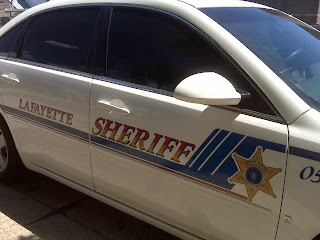
I have, historically, not been a fan of law enforcement. Some of this comes from an inherent distrust of "authority" and those wielding weapons. Some of it comes from my time living in Mexico, where it seemed I was the only one of my friends not shaken down by the local cops. I learned to blow right past the impromptu "security checkpoints" where folks were waved over on the side of the road by the policia. (Actually, one night on the drive home from Mexico City I got a flat tire at 2am and a cruiser stopped to help me put on a new one. When the two officers asked for payment, I pretended I didn't speak spanish and showed them my NYC drivers' license...rather than my Mexican license. "No speak-o spanish-o." Lo siento muchachos.) But along my current trip, law enforcement personnel have proven more helpful. The local police came to check on me at a campsite where I'd been harassed by a couple of drunk guys in central Iowa; I've been advised of safer, more bike-friendly routes in southern California by a state trooper; I was pointed toward a safe church lawn where I might camp in West Texas by the local sheriff's office. And there's the latest: greenthumbs at the sheriff's office. That I hadn't expected....

This past Tuesday, I had the pleasure of sitting in on a meeting at the sheriff's office in Lafayette, LA to discuss potential neighborhood garden projects. It was an idea initiated by the sheriff's daughter, who I learned is finishing up a degree in agricultural studies and who suggested that her dad contact folks at EarthShare to see about partnering on a few pilot projects. When you think about it, this actually makes total sense: community gardens help foster safer communities, so it's in the interest of the local lawmen to encourage them. (Have these guys read Seedfolks? Students, if you're reading this, you know what I mean.) It seems the sheriff's office and community watch folks agree.

So how will the whole thing work? Cops pulling weeds? Not exactly. The sheriff's office, as I understood things, would handle community outreach (something EarthShare has been short on staff to pursue), identify potential garden sites (largely housing projects and church properties in their jurisdiction), and provide the initial muscle to build the gardens. EarthShare, for its part, would help recruit volunteers and garden managers, act as a conduit for funds (it's an established 501(c)3), and extend its liability insurance to the sites as needed. The city planning department would help with site identification and planning -- Sanjay, who represented a local group of planners at the meeting, hopes that it will serve as a model for community action and empowerment. Stacey, over at the Nature Station, would draft the legal agreement and identify other possible stakeholders and their roles. Is this an exciting -- and unusual -- partnership, or what?

Lafayette is reclaiming its agricultural roots, building safer communities through neighborhood gardens. I hope to hear more about the progress of the project -- Community Roots -- in coming months. Gardening: bringing hippies and the law together at last.

Sent from my Verizon Wireless BlackBerry

Friday, March 26, 2010

Helping your neighbors

These days I often stumble across kindness in unexpected places. (A woman in a trailer at the campsite in Sanderson, TX walked over with a still-warm plate of pork chops and sweet potatoes for me as I started drafting this very blog post.) So, too, I am regularly astonished to discover people I would not have suspected quietly working away to make the world a better place, starting with their own community.

After an exhausting, uphill grind in the freezing headwinds last Saturday, I rolled into Sierra Blanca, TX. With nose and toes still frozen from the previous night's camping in Fort Hancock -- a town perhaps only notable for a passing mention at the end of the (brilliant) Shawshank Redemption -- I vowed that no matter what I would sleep indoors that night. The only open motel in town had rooms for $20 and a odd assortment of characters in the front office. I decided I would shower in my swimsuit, sleep in my sleeping bag on top of the bed, and pile my gear against the door. Yeah, sketchy. But indoors.

Before getting settled, I rode around the corner to pick up some milk for the next morning's breakfast at a quickie mart/used gun shop. (It's Texas.) After a brief chat at the checkout, Darlene suggested I retrieve my stuff from the motel and stay in her extra apartment, featuring a clean bed and one of the hottest showers I have ever had. I thought she was just a kind person. Well, she is, BUT there's more. It turns out Darlene is an avid organic gardener. As she showed me around the yard on Sunday morning, proudly pointing out blossoming fruit trees and fresh herbs, she also told me about her plans to develop 300 new green jobs in her area in about two years through the construction of a wind farm and a second project that will harness methane gas as an energy source from the nearby sewage treatment plant. This is not at all what I had expected to encounter in this sleepy little West Texas town, certainly not from someone I had met about 20 yards from the used handgun display.

Three days later, as Ollie and I rolled into Alpine, we poked our heads into the office of the West Texas Food Bank. (My plans to work with a local rancher had fallen through at the last minute so I was inquiring into other sustainable food goings on in the area.) Lulu, it turned out, was not only the food bank's outreach coordinator but also the driving force behind the town's first community garden. What luck!

As Ollie hung out at the food bank, Lulu kindly drove me around town to try and find me a place I might work and stay for a night or two with local organic gardeners. First we visited Sharon, a park ranger who was letting the local Boys & Girls Club use part of her property to form the inaugural community garden. There was work to be done, but the ranger was done working for the day, so Sharon joined us as we next drove to Beverly's place. Here, we learned of the outspoken activist's innovative use of shade cloth and how to repurpose drip irrigation line to build row covers. Fruit trees abounded, I marveled, and not a shred of black plastic in sight at this year-round organic garden. (Yes, I'm still harping on the rampant use of black plastic involved in most organic production farms. No plastic here: Beverly's hardcore.) After a brief stop to meet The Bikeman, Lulu and I visited Tom, the local expert on organic food production, a successful farmer with weekly orders from local families and businesses, and author of a guide to organic gardening. (The Bikeman had showed me his copy of Tom's guide -- it was well known around town -- as well as his own little tomato and pepper patch behind the bike shop.) Tom gave us a tour of his large garden and explained some of the techniques: he is also a proponent of shade cloth and recycled materials to protect plants from the region's extreme wind, drought, and pests. Lulu secured offers of help with the nascent community garden from both Beverly and Tom. Alpine? Home to a bevy of organic gardeners? Who knew?

After a night of pleasant conversation and tasty food (and a warm bed!) at Lulu's, I took Sharon up on her offer for a lift to nearby Marathon, TX, where she'd been meaning to revisit for some time. I spoke with a few folks around town -- including Sharon's friend Kate, who manages the lush gardens at the local B&B -- and discovered that here, too, there are folks quietly going about improving their local community. In particular, I was impressed by Danielle, a bartender at a friendly, local watering hole, who poured me a cold pint of beer while she expounded on the town's need for more small-scale businesses.

In a little town like Marathon that primarily supports itself on a sporadic tourist economy, there isn't much of a middle class, she insisted. The key, she explained, is to empower individuals to produce "value-added" products (dried fruit, preserves, cheeses, handmade goods) that can put a little money in their pockets and cultivate a local economy, then later perhaps look to expand to the region or even across Texas. Danielle has been involved in securing a shared workspace for entrepreneurs interested in starting one of these microbusinesses. Meanwhile, she is also trying to garner support to start a patchwork of community gardens around town as a first step toward getting more fresh, affordable produce into the hands of locals while cultivating the beginnings of a greenbelt. (Does your local bartender do this kind of stuff? I think I've been frequenting the wrong pubs until now... and not just because Billy Tom bought me a second pint.)

The small towns of West Texas may soon be greener than any of us might have imagined, all thanks to these dedicated women who are trying to help their neighbors help themselves.

Sent from my Verizon Wireless BlackBerry

Monday, December 21, 2009

Be the change you wish to see

I'd first heard about the Noyo Food Forest at the food security conference in Des Moines this past October, but I didn't manage to chase down the NFF folks in the midst of the hundreds of people I encountered while I was volunteering there. As it happened that Ollie and I would be passing right through the NFF headquarters on our way down the California coast, however, I realized I would have a second chance. I was excited for an opportunity to meet with the grass roots gardeners and community activists so I got in touch with the program's founder, Susan, who warmly invited me to check out the program. A few weeks later I found myself staying at the Grey Whale Inn -- a beautiful bed & breakfast in Fort Bragg and site of one of the Noyo Food Forest edible gardens. (Thank *you*, Katrina, for setting me up at officially the nicest place I've stayed along the way. Though there have been some comfy futons.) The innkeeper, Michael, and I feasted on local duck and a load of fresh veggies from the garden my first night there, and after an amazing raw food meal at a restaurant run by a Mormon Korean lady across town my second night, I was surprised with some of the best food of the trip. For a sleepy little town, Ft. Bragg could be a destination in itself. But back to the reason I came to visit....

The Noyo Food Forest was started a few years ago by a small group of dynamic women who had looked around themselves and been frustrated by a general lack of access to fresh local food while unused green spaces abounded. (It's not that there was nothing, but there wasn't much: a modest food co-op, one CSA, one small school garden.) Further, the decline of industry in this former mill town meant that many folks were disconnected from each other and the land. Morale was low in this isolated area. Taking Gandhi's mantra to heart, these gardening activists became the change they wished to see in the world: they began to build community gardens.

The first was the Learning Garden, which cultivates a plot of land behind the local public high school, utilizes buildings donated by the Mendocino County Office of Education, and is run by a small crew of devoted garden educators on the shoestring budget Susan cobbles together from sales and donations each year. Winding down its third growing season -- I learned from Sakina, the garden coordinator, as she showed me around -- the space has grown considerably from its humble beginnings, slowly expanding each year. It offers learning opportunities for adolescents and adults, supplies fresh produce to the school cafeteria and the farmers' market, and has been a point of pride for a number of high schoolers in the gardening class -- a well-attended elective -- who nurture the green oasis.

From the high school, Katrina, Susan, and I zipped over to the Head Start garden, where lunch and snacks are grown for the low-income-based preschool education program and an NFF staffmember runs weekly activities for youngsters and their parents. (Unfortunately, the timing of my visit didn't coincide with a lesson, but it sounds like a great program from what I can tell. Incidentally, improving child nutrition continues to be one of the strongest elements of Head Start programs across the country. It seems fitting that the tots and their parents learn how to grow and eat fresh, healthy veggies here.) Next it was over to the Come-Unity Garden, where we checked out 11 community plots and nibbled on apples as we admired the orchard under development. Then, after a brief walk around the town's only CSA (not an NFF project, but, really, it's all connected on some level and it was pretty impressive), we hotfooted it back to the Learning Garden to harvest fresh veggies and make a big salad for lunch. I needed my energy for the talk I was giving to the high school gardeners at 2pm.... They were a nice bunch, and asked lots of questions (mostly about the biking, though the adults sitting in prompted more questions about the farming and sustainable food pieces of my project).

Something that really impressed me during my time learning about the Noyo Food Forest was its amazing success with partnerships. This is partly because the need for pooled resources (money and land) brings NFF to the table with local groups -- schools, the Head Start program, the senior center (which I didn't have a chance to see), the Grey Whale Inn, Thanksgiving Coffee (site of the Come-Unity garden) -- but it is also because there are natural connections between gardening and so many aspects of community development. The gardens are sowing seeds of hope and awareness in Ft. Bragg: during one of our cooking sessions in the Inn's kitchen, Michael described the building of the garden at the Grey Whale as transformative, how neighbors had begun to stop by and admire the garden, complimenting the innkeeper -- who, until the garden, felt that he was considered an outsider here -- on its progress. He admitted to experiencing a quiet joy when immersing himself in the green space from time to time, sometimes incorporating the garden goodies into the Inn's offerings.

The Noyo Food Forest is working to empower folks to feed themselves, but the gardens are, in the process, fostering healthy communities as well. And not just here in Ft. Bragg. They have links to groups in places as nearby as Willits (30 hilly miles east) and as far away as Kenya (where a sister garden was started). It's the kind of program that could be replicated in many other places, adapted for different communities while maintaining its core philosophy. Gandhi would be proud.

Sent from my Verizon Wireless BlackBerry

Saturday, November 21, 2009

The namesake

Many months back, I held a little contest to come up with a name for my new bicycle, my steady, steel-framed companion for the coming year. After many creative (and hilarious) submissions, my friend Ben inspired the winning entry -- Olympia -- during a conversation while riding home from the bike shop one evening, describing Washington's state capital as one of the most beautiful places he'd ever been. Plus, I thought it sounded like a good, sturdy name. (Not that "Bertha" wasn't sturdy sounding.) And it had the added bonus of being roughly half way along our route. This past Thursday morning, Ollie and I rolled (or, rather, slogged) into town and did our best to embrace "all things Olympia" that we could muster during our brief time there....

We got to see a good bit of the north and west sides of town when, mapless, we got somewhat lost on the way from Evergreen College (where I'd joined a potluck and sat in on a film and lecture on pesticides) to Shae's house (where we would be staying); we saw much of the east and south sides heading out of town. Another hilly city, what a surprise. Cute, though, and home to two food co-ops. (We visited both, of course.)

Thursday evening before the trip out to some of the Taylor Shellfish sites to see clam and oyster harvesting in action, Marco, Lalita, and I feasted on fresh seafood at their home -- including tiny, salty, raw Olympia oysters (which, incidentally, had been endangered up until just a few years ago, before groups like Taylor had dedicated efforts to cultivate these tasty native bivalves) and carrots and beets pulled right from the garden. I think the wine and quinoa were sourced a bit further afield, but still: delicious.

Friday, after a trip to the Olympia Coffee Roasting Company for a cup of outstanding fair trade java, we stopped by the town's famous Artesian Well to fill up our water bottles with what was rumored to be the best water anywhere. (It was certainly a heck of a lot better than the water in Iowa. Yeah, I'm talking to you, Des Moines.) The barrista at the coffee house warned me that folks who drink the well water were bound to return to Olympia... or never leave it. (Oooh, foreboding. I triple checked Ollie's tire pressure this morning before we left. Not that it's a dreadful town, but we do have quite a bit of the country yet to explore.)

Friday afternoon, I met with Kim, one of the founders of GRuB -- a community garden and youth empowerment project in town. She gave me a tour of the gardens and told me about some of the cool programs GRuB is involved with: the construction of 100 free kitchen gardens each year for low-income families in the area, the training and employment of at-risk teenagers to grow food for sale at the farmers' market, donations to the local food bank. Sounds like my kind of nonprofit, and Kim helpfully suggested a few other programs to check out as I make my way south through Oregon and California.

Friday evening, I was invited by Ian, of Olympia's own "The Bike Stand" bike shop, to join a few friends for some of the finest local (organic) microbrews around and a plate of fish tacos. Mmm, local cod and cilantro. They say its the great water that makes for such tasty pints at Fish Tales, and I am not altogether unconvinced. Were I not slated for an intense day of cycling the following morning, I more than likely would have tried a few more of them. (I wonder if the town water's mystical properties apply to the beer as well.)

As we make our way toward Portland, I've noticed that Ollie seems a bit sluggish. Most people might think it's the headwinds or the near-constant rain or the unanticipated hills slowing us down, but my hunch is that it's the water trying to draw us back. Onward, Olympia!

Sent from my Verizon Wireless BlackBerry

Wednesday, October 21, 2009

It starts with a seed


I've been doing a lot of thinking these days about what it means to live in line with one's ideals. To walk the walk, as it were, or as Gandhi suggested, "Be the change you wish to see in the world." My journey in recent months seems to have thrown me into the path of many people who are doing just this (and, thankfully, not into the path of too many aggresive drivers trying to run me off the road). One of the folks whom I have had the good fortune to come to know who easily falls into this category is David, founder of The Pepperfield Project.

After many years as a garden manager at Seed Savers Exchange -- where he grew out something like 15,000 heirloom varieties of vegetables and flowers -- David has quite the gardening pedigree. Before that he'd run an organic farm out in California and collaborated on multiple books about mankind's relationship to nature. His life demonstrates an ongoing commitment to reconnecting people to the land and celebrating the food they can grow on it. During each of our conversations over the course of the few days at his home, I admired David's strength of conviction, generosity of spirit, and ability to bring out the good in those around him. (As if that doesn't make him awesome enough, he has also captured nearly impossible images of beauty with a 35mm lens during his days as a professional photographer -- success which has allowed him the financial freedom to start the Pepperfield Project -- and he's a good hugger to boot.)

Through a series of previously unimaginable coincidences that began in Dubuque a few weeks back, I found myself in Decorah last weekend working alongside my new friend Wren (a fellow volunteer at the food security conference), Mary (and her family who had recently moved to the area), and David on an exciting proof-of-concept edible landscape garden on the grounds of the local hospital. The project was born out of a fledgling 5-county initiative in northeastern Iowa to incorporate more fresh produce into local foodsheds (including the oft neglected hospital, public school, and prison systems). The medical center plot was meant to be a test case to see how on-site organic gardens might be integrated into institutional settings. The garden, begun earlier this year, was both productive and aesthetically pleasing, and had quickly become a point of interest in the small town. It was featured in the local paper. People would stop David on the street to hear more about it. A sign in one of the windows facing the green space read, "Thank you for the garden!" It was a hundred times more well-received than David could have anticipated.

It didn't just happen spontaneously. The project was successful because of the relatively small size of the garden (which took 8 of us a little over an hour to pull up all of the plants for composting over the winter, but apparently it produced a heck of a lot of food), a willing board of trustees, and the cooperation of food service and groundskeeping staff at the facility. David and a small cadre of volunteers raised and transplanted hundreds of seedlings, harvested crops, and maintained the demo garden during the growing season. (He envisions being in more of an advisory capacity for future gardens, encouraging institutions to take over management of the edible green spaces.) A flexible food service purchasing manager waited to see what was available in the garden before placing the biweekly orders. Menus were altered to incorporate the seasonally available produce. (Better not to pay the doctor *or* the grocer when you grow it on site, no?)

The Winneshiek County Medical Center garden is the first of many Pepperfield Project brainchildren of David's, I suspect, as he continues to foster relationships between people, gardens, and food. The next project in the pipeline is an edible garden on the Luther College campus. David says there's been some hesitation on the part of the groundskeeping staff, but they haven't met him yet. I tell you, after about 10 minutes of talking with him they'll probably be scouting out the best spots on campus to transplant heirloom tomato seedlings.

Thursday, July 2, 2009

Beets Not Bombs

The highlight of my time in the Boston area was on Tuesday morning when I had the pleasure of working with a group of middle schoolers involved in the City Sprouts summer program (an initiative of the Cambridge Public School system that encourages community gardening in schools). Louise had invited me to talk a bit about my project and do a culinary lesson with her group of young gardeners at Graham & Park School, so after a tour of their lush green space, we flipped on the hot plate and got cooking. About fifteen minutes later, with the help of three willing and able sous chefs, we sat down together at the garden's picnic table to enjoy my favorite broccoli (complete with nuts, raisins, red pepper flakes, and garlic, but lacking tomatoes, as these were not yet in season). They were so great, the rising 7th and 8th graders, and while we ate they regaled me with descriptions of their favorite recipes and tales of field trips around the city that they had taken with the City Sprouts program. Afterwards, Ollie and I rode back through the drizzle along the lovely Charles River to Brookline and I proceeded to cook up a storm for a group dinner with Caron and her roommates. I love when friends let me take over their kitchens, and contrary to her claims of unpreparedness Caron had lots of interesting goodies for me to work with, including a tin of anchovies and a bottle of red wine. Yum.

After a visit to a less-than-welcoming local farm (which will remain nameless to protect its identity) with Caron on Wednesday, I made my way to Jamaica Plains to grab a bite at Cafe Ula -- good food, cantankerous staff -- with my friend Michelle before heading to Bikes Not Bombs. I hadn't seen Michelle since our days in AmeriCorps, so I was elated when she decided to join me at the peacenik bike co-op for one of the weekly volunteer nights. We chatted away as we sorted and packed crates of handlebars, bike chains, and other bits in preparation for an upcoming shipment of hundreds of bicycles and spare parts to Ghana next weekend. Good stuff. We even flattened our first bike to get it ready for loading. (Check out Michelle wielding the wrench!)

Speaking of bikes, I needed to get Ollie looked at after 9 1/2 weeks of rain and an unfortunate series of city potholes began to elicit odd new sounds. Things were bustling at last night's BNB volunteer night, so I waited until this morning and made my way to the closest neighborhood bike shop. In this case, it was the Brighton Ave branch of the International Bicycle Center, where Marcus got Ollie unsqueaked and even reattached her tire pump holder (which I had temporarily macguyvered with a piece of sponge and some zip ties after the infamous ditch dive). Now, bike mechanics have a bit of a reputation for being surly, but such was certainly not the case here. We chatted about bike touring, I learned about wheel rim cleaning, and Erich wandered over at one point and chimed in, telling me about the city's locavore scene. Pity that I finally meet the friendly folks on my way out of the city.

Yes, once this morning's thunderstorms dwindled to mere pouring rain and sideways gales, Ollie and I hit road, heading north toward our next farm....


Sent from my Verizon Wireless BlackBerry